First Born
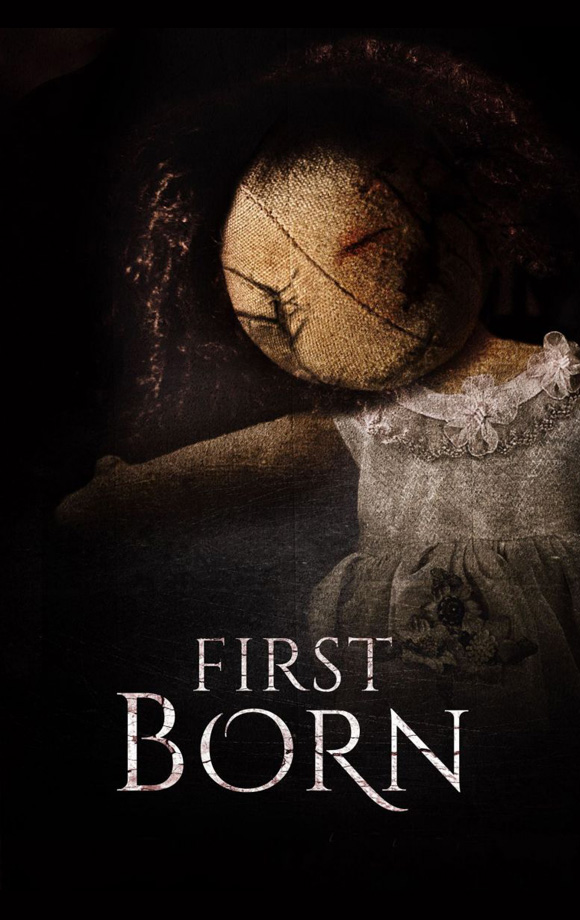
Originally titled ‘Thea’ during production, ‘FirstBorn’ is a British supernatural horror film directed by Nirpal Bhogal and co-written by Bhogal and Sean Hogan. The film follows Charlie (Antonia Thomas) and James (Luke Norris), a young couple whose lives are upended when the birth of their daughter Thea attracts terrifying supernatural entities. As the child grows, the family is forced to adopt increasingly strange rituals to keep her safe, including painting protective symbols around doorways and forbidding her from having dolls with faces. When these measures begin to fail, the family turns to Thea’s occultist grandfather Alistair (Jonathan Hyde) and later a powerful elderly spiritualist, Elizabeth (Eileen Davies), to help her understand and control her abilities.
‘FirstBorn’ received its world premiere at the Edinburgh International Film Festival in June 2016 and went on to screen at the Sitges Film Festival later that year, two of the most respected genre festivals in Europe. Scream Magazine described it as “an impressive second feature” from Bhogal, who had previously directed ‘Sket’, while other reviewers drew comparisons to ‘Insidious’ and ‘Rosemary’s Baby’ and praised the film for being “emotionally-driven and fuelled by anxiety” rather than relying on cheap scares. Antonia Thomas, already known for her role in the Channel 4 series ‘Misfits’, was widely singled out for her honest and grounded portrayal of a young mother struggling to hold her family together under impossible circumstances.
The film was produced by Uzma Hasan through Little House Productions and Moli Films, and distributed through Netflix internationally.
About the score
The main composer for ‘FirstBorn’ was Walter Mair who I assisted by writing additional music, contributing cues across a range of the film’s tonal demands. The score leaned into a blend of orchestral and electronic elements, creating a sonic world that could shift between intimate domestic unease and full-blown supernatural horror.
My contribution focused on writing original cues that sat at both ends of the film’s emotional spectrum, although the majority of my work was on the darker, more intense material. These cues needed to feel heavy, twisted and deeply unsettling, reflecting the increasingly disturbing supernatural presence that surrounds Thea and the toll it takes on her family. For these cues, I worked with dense, dissonant textures, distorted low-end elements and abrasive sonic layers designed to put the audience on edge and support the dread that Bhogal was building through his direction.
There’s a physicality to horror scoring that I find particularly rewarding. The goal isn’t just to break viewer’s sense of security, but to create a sustained sense of unease, a feeling that something is fundamentally broken in the world these characters inhabit. Several reviewers noted the impact of the film’s musical cues in its scare sequences, with one describing how the set pieces “rely on their abrupt musical cues and disorientation” to unsettle the audience.
Alongside the darker material, I also composed a number of lighter transitional cues. These were used to score drone shots, journeys and moments of relative calm between the horror sequences. Getting the tone right on these was important because they needed to provide the audience with a moment to breathe without entirely releasing the tension. There’s a fine line between relief and complacency in horror scoring, and these cues had to sit in a space that felt open and expansive compared to the claustrophobic interiors of the family’s flat, while still carrying an undercurrent that kept the viewer alert to the possibility that something could shift at any moment.
Writing music that needs to genuinely disturb an audience requires a different kind of craft to most other genres, and the experience of working across both the darkest and lightest registers of the same score gave me an appreciation for how contrast and dynamics can be just as powerful as sheer intensity when it comes to keeping an audience unsettled.
Credits
- Network: Digital (Netflix)
- Director: Nirpal Bhogal
- Role: Additional Music
Links